Sunday, August 16, 1998

Emily Haines Sheetmusic With Lyrics

Ausfahrt nach München (GERMANY)

Munich - Germany, 14.08.1998

German motorways are big, fast, and are generally well marked. For several days we noticed that reference was to a place called " Ausfahrt" which lies to the left of the road. But the lineup was repeated every so often and could not believe that so many people were called as well. Finally we learned that means "out" in German. At

Munich (München for local people), we stayed in a good location from downtown, the Hotel Pension Toskana (Schwanthalerstrasse 42), rather expensive for our average but good.

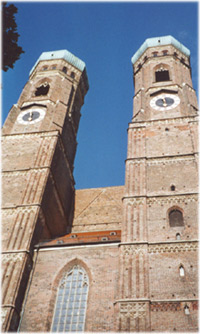
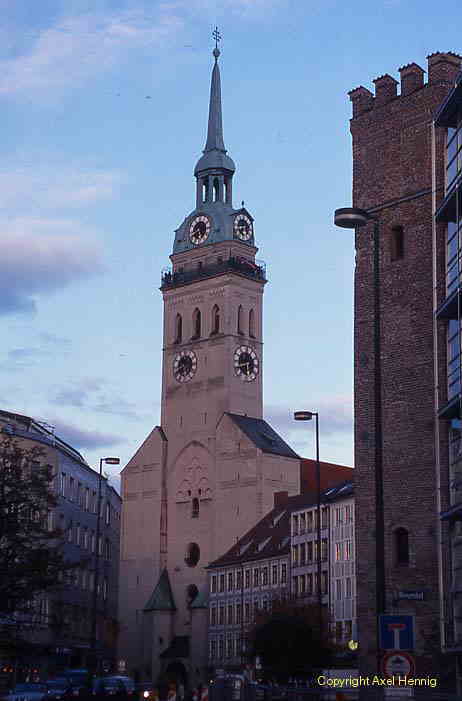
Munich is full of churches : Theatiner (second half of XVII century - Italian Baroque), Frauenkirche (Our Lady, 1468 - with two clock towers), Saint Peter (built in the century XIV), Saint Michaels (1583 - instead of the German counter).

The main square is Marienplatz, where the old Gothic Town Hall (Rathaus ) with a concert carillon (Glockenspiel ) not worth the wait. view is beautiful from tower. Discover

for photos are Residenz Palace , where they lived the kings of Bavaria , and Olympic Stadium Munich , which is best seen from the television tower there close.

In the area of \u200b\u200bthe stadium, we have a great show with games (Theresienwiese Fair Park for Oktoberfest ) and try German beer (type chop, in a giant jar), very fresh, probably with added groups.

On the shores of the Isar River (mostly channeled) many take sun (and despite being among the city do not miss the topless nudity nor ). We were in

Dachau, one of the Nazi concentration camps most important (the first in 1933 and continued in operation until 1945). It is difficult to describe the feelings to be there. Personally I avoided the photos which they consider unnecessary. As in other situations horrific recent history of my country, it is important to remember to keep firm the NEVER AGAIN.

Freiburg - Germany, 16.08.1998

Destination: Zurich (Switzerland) we stayed at the hostel Freiburg (Kartäuserstrasse 151). With breakfast and central, so it is a better choice. Then

Baden Baden in the Black Forest (mountains, lakes and lots of green landscape in the extreme southwest of Germany), and crossed into Switzerland to reach the Rhine Falls

Wednesday, August 12, 1998

Extreme Pain Under Big Toe

The heart of Bohemia (CZECH REP) no wall

Prague - Czech Republic, 12/08/1998

Prague is the center of Bohemia region and capital of the former Czechoslovakia , Czech Republic today. But it is also a city frozen in time, on the banks of the Vltava river, full of charm, history and culture (among the most famous: Franz Kafka , and the author of "The Unbearable Lightness of Being" - Milan Kundera ). was in Prague where Mozart premiered Don Giovanni.

is a city for walking slowly, enjoying their pedestrian streets, its corners , its culture, and old buildings . The city stands as if by magic, as bombs or wars, or earthquakes in the area touched Prague.

The Castle and Cathedral of San Vito (with spectacular stained glass ) are on top of a hill (the cobblestone streets are quite steep, and some have stairs). From there the view is breathtaking. We also witnessed a new change of guard , this time the Czech style, with uniforms and celestial boxes and musicians playing from the castle windows . The

bridge (Charles Bridge ) a jazz band making music with acoustic instruments and singing with a copper cone as an amplifier, tempting the visitor to sit and relax. Legend has it that a priest (San Juan Nepomuceno ), who declined to share the confessions of Queen Juana Bavaria at the request of King Wenceslas VI, was released into the river from the bridge (a plate, which all play for luck, remember the fact.)

The main plaza across the river Vltava , has an astronomical clock on top of City Hall, which has motion (passed the twelve apostles) and sound on the hour.

The Church of Infant Jesus of Prague is another amazing place in the tour, with high symbolic value and a small statue of Jesus child covered by a layer of fabric that changes periodically. Another church we visited was that of Our Lady of Tyn .

Prague we take to eat right, it is the cheapest place in Europe. One thing that was pending, was to go to theater (especially is famous for its works black theater and puppets ).

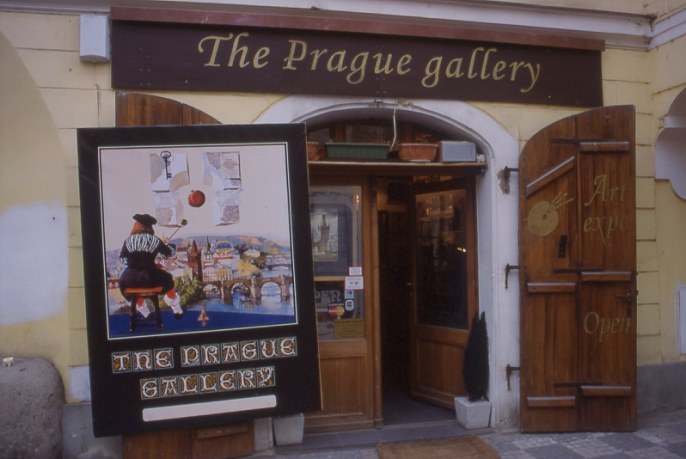
Prague is devoted entirely to tourism, and it shows in the overcrowded streets of foreigners. The old town houses are bars, discos, hostels, souvenir shops, or local Bohemian crystal. But everything is tidy and well maintained. It even has a very distinct aesthetic, which is reflected in the memories that you can bring as pitchers , shirts , posters, etc. The mark " explosive fun" has several attractive designs souvenirs Czech artist Jiří Votruva .

We entered a place that seemed a "museum of armor" and then noticed that each artifact was posted price, it is not a museum but a tent. Manufactured armor and other period objects and sell them.

An amusing anecdote was communication with a pair of veterans that we stayed at home (Family Plasil - Sturnova 4, Natruhlarse). They spoke only German and Czech, we were responding to them in English, but we understood. On the day of historical record heat, the landlord shows the men of the group the cover of the journal where it appeared a woman with her breasts exposed. It was difficult to translate his comments, nor decipher the words of his horrified wife would be saying to our colleagues, something like "these men".

The contrast is at the entrance to the city, then on the road the first thing you see are night clubs, wisquerías, motels, etc. Promoted by half-naked girls. The Czech Republic is a red zone widespread in Europe, and has much to do with the high truck traffic it receives. What's crazy is that the route are in the midst of nothing, prostitutes and garden gnomes - both at the sale, and quite ugly.

Near Prague is the city of Pilsen , and obviously there were, as it is the cradle of the most widespread of the world beer. We visited the Museum of Beer .

Tuesday, August 11, 1998

Spider Solitaire Are Solvable

Berlin (Germany)

Berlin - Germany, 09.08.1998

The northern route from Berlin to is long, forcing us to spend a night in a German people who are on the road. We were lucky (after 6 hours looking for somewhere good and cheap) ended up in the Hotel Bur Mueber Bucht (1 route 192 Schwerin ). A beautiful cabins that we release, through the kindness of several Germans who were diverted to consult to guide us, and even came to be lowered themselves to ask us.

The next day we got to Berlin and settled in Hostel St. Michaels Heim (Bismarkalle 23), a beautiful old building which had a great time. Be prepared to walk a lot, then ride the truck is not practical, and distances are enormous.

the "Avenida de los Tilos " is the longest in the world, and traveled from the famous Brandenburg Gate ( Paris Square), after having been in the Across the city, visiting the War Memorial with Russian characters are still present.

On both sides of the city (formerly divided by the wall ) are interesting places like The Museum of National History (with a good account of the recent history of both Germany and the reconstruction process ), the Cathedral of St. Nicholas (with an impressive pipe organ) and a monument to Marx and Engel (opposite the town hall ). There is also a church (Kaiser Wilhelm ) is impressive as it remained standing despite the bombing.

Dresden - Germany 11/08/1998
Leaving Berlin
go through the nearby city of Potsdam (ancient capital of the Prussian empire) where Stalin, Churchill and Truman met to resolve the fate of Germany after the war ended in 1945 . Visited the University and the New Palace (1769), the Palace Orange (1851), the Sanssoucci (1745) with stairways and gardens, and the Chinese Tea House .

Sanssouci was the place of residence summer Frederick "the Great" . Years later, as have the very biographies Napoleon could not believe I was sleeping in the same bed and being awakened by the same clock that years ago, had been held by Frederick II of Prussia.

Later we stopped at the city of Dresden , where the most striking is the Fürstenzug mural depicting the procession of the Dukes. The mural consists of 24,000 painted porcelain tiles, occupying one hundred meters long.